

The Patrick Bateman Phenomenon
I feel consumer culture is stripping us of our common sense

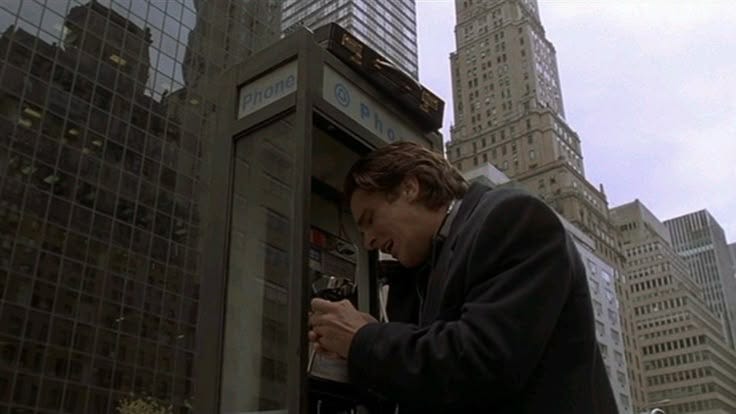
The 2022 American Psycho renaissance was my introduction to how consumerist culture can spin out of control. In short, Bret Easton Ellis’s novel, American Psycho, is a satire on the 80s yuppie culture situated on Wall Street. The term “yuppie” refers to young urban professionals who are successful in business and considerably affluent. By displaying a Wall Street investment banker’s decadent lifestyle, Bret Easton Ellis criticises how living in a deeply consumerist society can lead to one’s life becoming vapid.
It’s 2025, and we’ve come full circle.
Every corner of social media pushes forth new products or lifestyle choices that can allegedly help us become a better version of ourselves. We see extravagant skincare routines, new dieting tips, the pendulum of beauty trends, and shiny gadgets that we simply must have to improve our lives. If I’m being honest, some days I feel like just chucking my phone into an abyss because of the onslaught of content.
As criticised in American Psycho, wanting, buying, and consuming more and more things ends with us being disconnected from reality. You may be wondering how. In my opinion, Katy Perry’s recent space flight perfectly represents this notion. To many of us, this flight feels incredibly out of place given the dicey situation with climate change. More than anything revolutionary for women, this flight just spotlights how money makes people disconnected from basic humanity; the rest of us, not included in the population of millionaires and billionaires, are constantly being told to reuse, recycle, reduce (as we should, though) while they spend money on 11-minute flights to space and jetset around the world. The rich promote a ceaseless list of products for us to consume, fuelling their multimillion-dollar empires while we see dollars trickle out of our bank accounts, as if owning their products makes us like them in some shape or form.

Capitalism relies on consumerism to function. Believing the myth propagated by companies to consume more and more of their products makes us no better than American Psycho’s vacuous protagonist, Patrick Bateman, in some ways. In the novel, his description of products he owns spans paragraphs, even pages, thereby illustrating how deeply Patrick Bateman subscribed to consumerist culture. He also judged people based on their exterior - clothes, shoes, branded items - rather than their character, which displayed how empty his character had become. This is not dissimilar to how we begin perceiving people based on items they own from a young age, such as whether or not one owns an iPhone, or if one wears branded shoes like Adidas to primary school.
This sort of signalling has become increasingly prevalent amongst younger generations thanks to social media.
In an era where we have advertisements of all kinds being constantly thrown at us, it’s time to take a step back and assess whether all this consumerism is really necessary. TikTok will shove a million items that you may or may not need in your face. Instagram will aestheticise new products to seduce you into buying them. I’m not immune to the constant barrage of advertisements thrown my way. Now and then, I find a shiny new item that I know I would love to add to my collection of things, but it’s simply not necessary. There’s a very thin line between liking something and engaging in over-consumerism, and it’s important to know when you’re stepping over the line before it’s too late. For example, there’s a difference between having a nice collection of shoes and buying everything under the sun just because of trend cycles - one may be considered a hobby, and the other is a genuine problem.

However, not all hope is lost.
I feel that a major part of consumerism these days is easy access to the Internet. The digital world has taken a life of its own, and it’s completely separate from what is real. We constantly see people buying things on our social media feeds, but it's just as likely that your friends and family are in the same boat as you are - simply an audience to the overconsumers of the internet. I feel that the people out there who buy 10 Owala water bottles of different colours are just a part of a very niche group of people who are just chronically online, people who have already subscribed to the consumerist culture and haven’t realised how futile it is as yet. Additionally, big brands understand how to target their desired audience. For example, as Sabrina Carpenter rose to fame, SKIMS grabbed the opportunity to collaborate with her. Another example would be Rhode’s collaboration with people like Tate McRae or Alexandra Saint Mleux, people who embody the brand’s vibe. Or even the Louis Vuitton x Murakami Y2K collection with Zendaya fronting it.

Essentially, all these brands know how to tap into the latest internet cycles to cater to us the best to influence us, as we are well aware of that. Yet, their marketing still works, and we find it hard to break out of that cycle.
The only solution I have - and it may seem superfluous to many of you, if I’m being honest - is practicing mindfulness. The type of mindfulness that takes us out of the cesspool of consumerist culture on the Internet, and allows us to not burn holes through our wallets just because there’s a new trend on the market. The type of mindfulness that is also more grounded in reality, and helps us differentiate between a chronically online person’s thoughts and an average person’s thoughts.
I ALMOST SENT THIS TO YOU then i saw u wrote it you go my girl u go
a well-written piece! social media is a major factor that influences our perceptions of worth. sometimes it’s like your worth is based on how much you keep up with trends and have all the latest products